
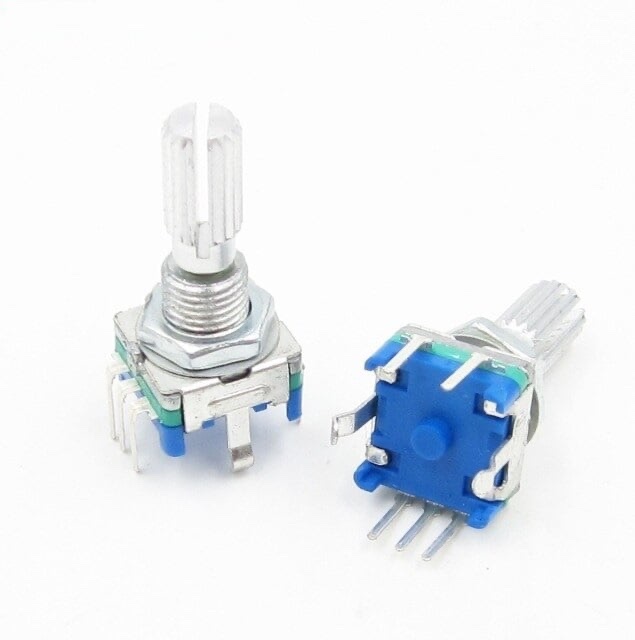
20mm EC11 Rotary Encoder
KSh 140.00
In stock
The 20mm EC11 Rotary Encoder is a compact incremental rotary input device commonly used for user interface control in embedded systems and electronic equipment. Unlike a traditional potentiometer, it provides digital pulse outputs that indicate rotational direction and step count, making it ideal for precise position tracking and menu navigation.
The EC11 features a 20 mm body diameter and typically includes an integrated push-button switch, allowing it to serve as both a rotational and selection input device. This makes it widely suitable for applications such as volume control, frequency tuning, parameter adjustment, and menu scrolling in microcontroller-based systems.
Key Features
Type: Incremental mechanical rotary encoder
Body Diameter: 20 mm
Output Signals: Two digital pulse outputs (A and B channels, quadrature)
Switch Function: Built-in momentary push-button (press-to-select)
Detents: Available in stepped (click) versions for tactile feedback
Operating Voltage: Typically 3.3 V or 5 V logic compatible
Mounting: Through-hole PCB mounting
Shaft Type: Knurled or D-type shaft (varies by model)
Working Principle
The EC11 encoder generates two square-wave signals (Channel A and Channel B) that are 90° out of phase (quadrature encoding). By monitoring the sequence of these signals, a microcontroller can determine:
Direction of rotation (clockwise or counterclockwise)
Number of rotational steps (position change)
Each detent corresponds to a specific number of pulses, allowing accurate digital control without analog drift.
You must be logged in to post a review.
Related products

Products
-
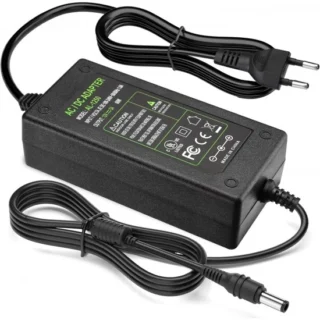
 12V 5A power supply adapter
KSh 900.00
12V 5A power supply adapter
KSh 900.00
-
Oraimo type C USB cable for ESP
KSh 400.00
-
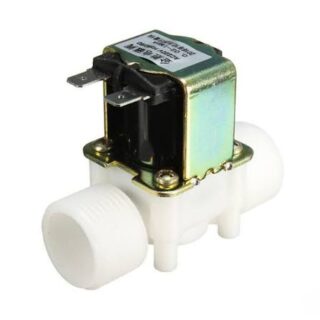
12v 3/4” solenoid valve
KSh 1,200.00
-
16 GB SD card
KSh 1,200.00
-
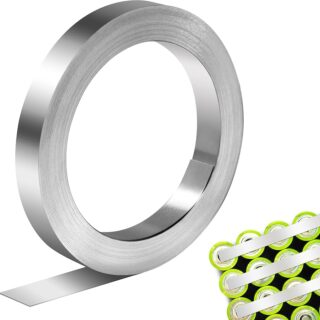
Nickel-Plated Strip for 18650 Lithium Battery – 0.15×8mm (Per Meter)
KSh 250.00



Reviews
There are no reviews yet.